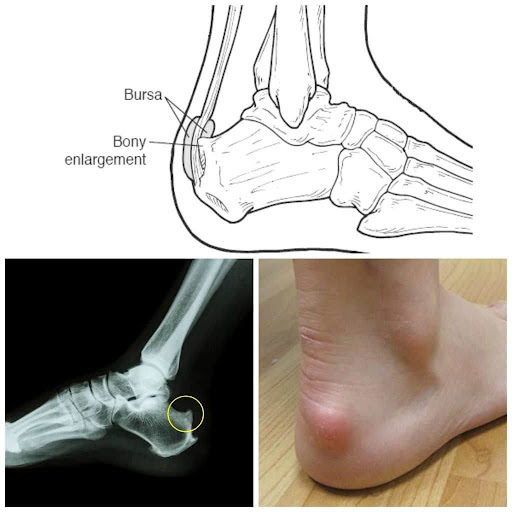
🦶 Haglund's Deformity: Understanding the "Pump Bump"
■ Definition: Haglund's deformity is defined as an abnormality of the bone and soft tissues in the foot. It is an enlargement of the bony section of the heel where the Achilles tendon inserts. It is characterized clinically as a symptomatic osseous prominence of the posterolateral corner of the calcaneus. This prominence results in posterior heel pain and swelling around the insertion of the Achilles Tendon. Haglund’s deformity is often associated with retrocalcaneal bursitis.
📜 Key Facts and History
■ Described by Patrick Haglund in 1928. ■ Previously known as “winter heel” and “pump bump.” ■ “Pump bump” refers to pressure from the rigid backs of pump-style shoes that aggravate posterior heel pain and swelling.
👩🦰 Epidemiology
■ Occurs mostly in young females. ■ Most common in women aged 15–35 years, especially those who wear heels regularly. ■ Also common in runners.
⚙️ Etiology and Predisposing Factors
While largely idiopathic, several factors predispose individuals to developing it:
■ Genetics (hereditary): Bone structure may predispose to the deformity. ■ High foot arches (Cavo varus deformities): The heel tilts backward into the Achilles Tendon, leading to bony protrusion and inflamed bursa. ■ Tight Achilles Tendon: Causes pain by compressing the inflamed bursa. ■ Walking on the outside of the heel: Causes calcaneus to grind against the tendon, forming an inflamed bursa. ■ Increase in weight. ■ Injury. ■